27th July
So today marks the day I am able to attend a Japanese Summer Festival for the first time, I’ve learnt that convieniently there is the Sumidegawa Festival happening near my area when I conducted my first Interview and I wanted to use this opportunity to research and inform about the cultural significance of japanese summer festivals. With the focus on the sumidegawa river festival.
Japanese summer festivals, known as “Natsu Matsuri”, are a deeply rooted cultural tradition, rich in history, ritual, and community celebration. They are held throughout the country during the summer months, often tied to religious or cultural significance, and are a major part of Japan’s seasonal calendar. These festivals offer a chance to honor deities, celebrate harvests, and commemorate historical events, while also providing the community an opportunity to come together for fun, food, and traditional performances. One of the most famous and historically significant summer festivals is the “Sumida River Fireworks Festival” (Sumidagawa Hanabi Taikai), which holds a special place in the culture of Tokyo and Japan as a whole. Which now I am lucky enough to attend.
When it comes to the cultural significance of Japanese Summer Festivals the spiritual and religious roots play a major role. Many Japanese summer festivals have their origins in religious practices, specifically Shinto and Buddhist traditions. Festivals such as Obon[1], which honors ancestors, involve rituals to appease spirits and ensure a good harvest or protection from disasters. Others, like the Gion Matsuri in Kyoto, are associated with rituals to prevent plagues or natural calamities. These festivals create a bridge between the spiritual and physical worlds, blending sacred rituals with lively public celebrations. But not only are these festivals important and valuable because of their religious side but they are also used for community and family bonding. These summer festivals are community-centered events, fostering a sense of togetherness among local residents. They are usually organized by neighborhood associations or local temples and shrines, offering an occasion for communal bonding. Families often attend together, and people dress in traditional “yukata” (light cotton kimono), which adds to the festive atmosphere. The temporary stalls selling food, games, and local crafts contribute to the sense of shared enjoyment. The beauty of these festivals is that everyone is welcome to participate in the “cultural preservation”, also tourists. Because these festivals are important for preserving traditional Japanese music, dance, and art forms. “Taiko drumming”, “bon odori” (folk dance), and performances of classical Japanese theater like Noh and Kabuki are commonly featured. The festivals also showcase local specialties in food, further preserving regional culinary traditions. Which is a win- win situation as tourists get to be immersed into the japanese culture whilst the japanese get to reconnect with their roots and traditions. These summer festivals are often seen as times of renewal and are linked with the agricultural cycle. The intense summer heat, coupled with the festivals’ vibrant energy, symbolize a time of growth, vitality, and renewal of community spirit. Fireworks displays, a staple of summer festivals, are believed to ward off evil spirits and serve as expressions of hope for the future.
Now more into detail with the Sumidagawa Fireworks Festival (Sumidagawa Hanabi Taikai) which I will be able to experience.
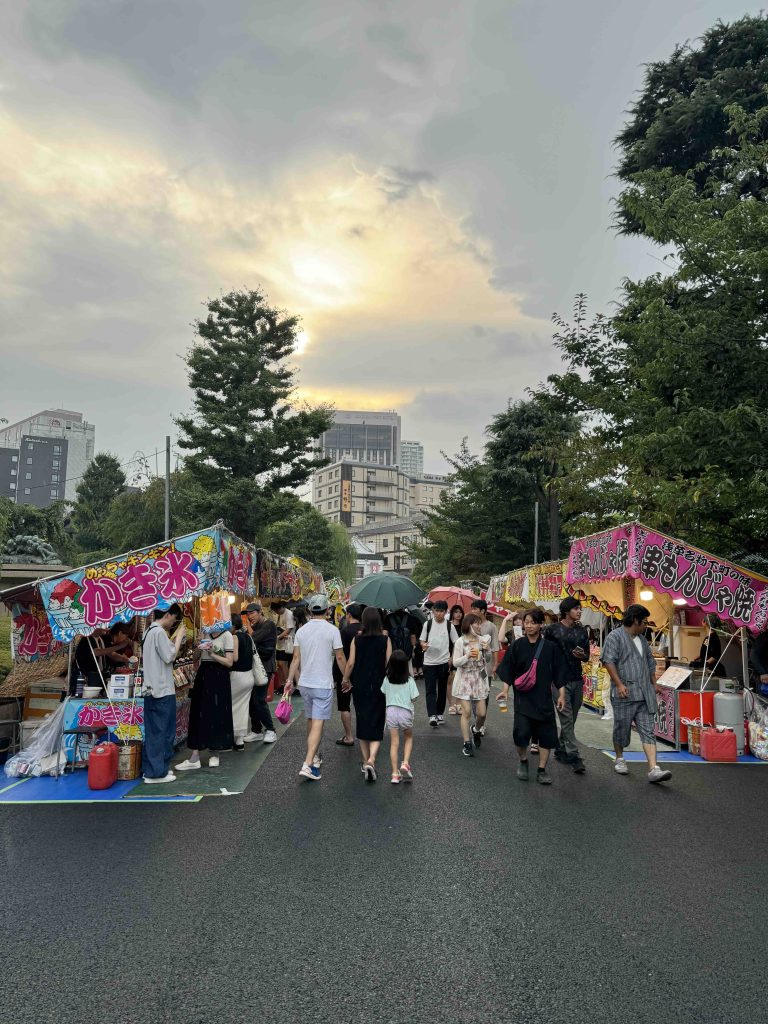
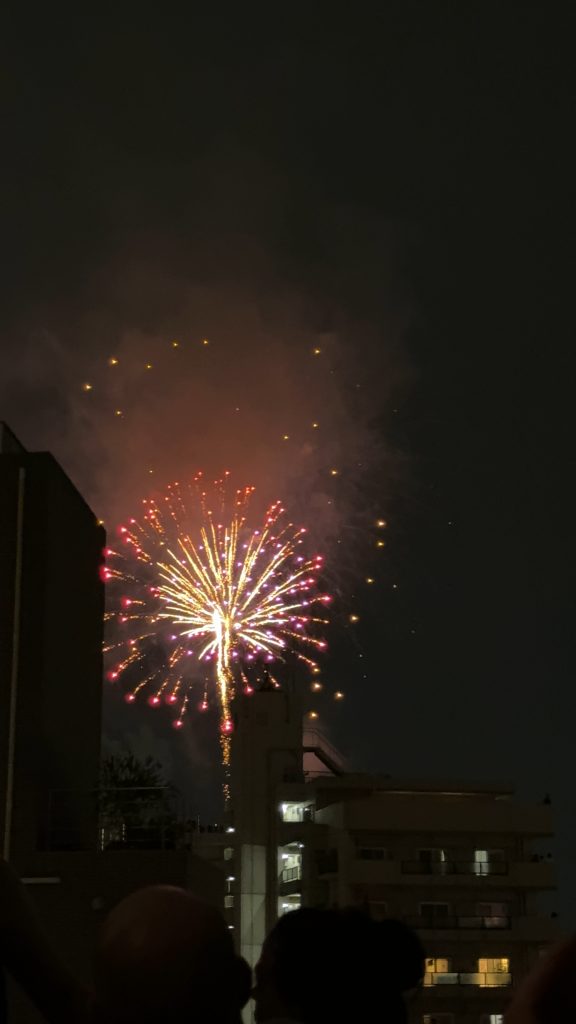
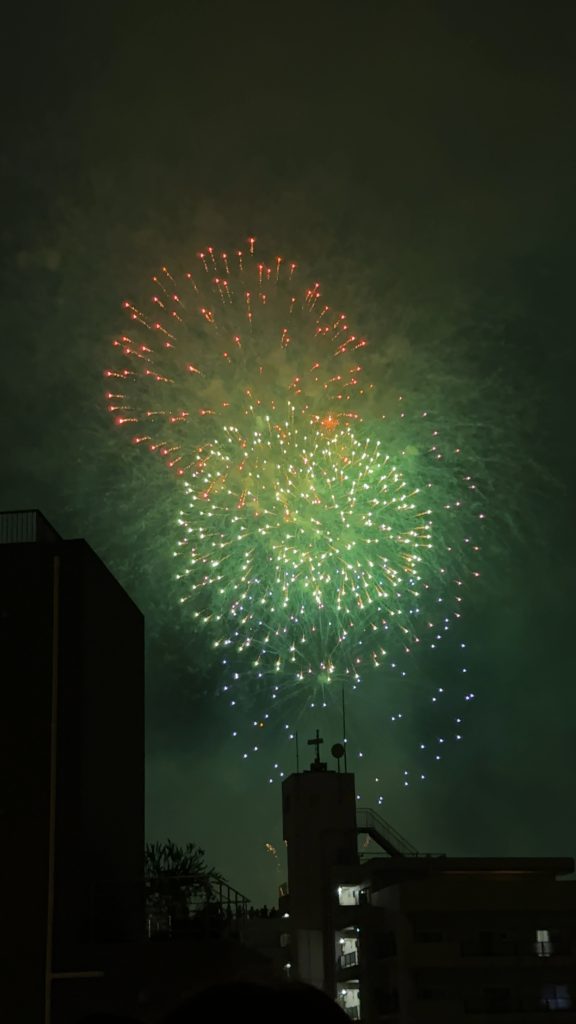
This festival is one of Tokyo’s most iconic and beloved summer events, takes place along the Sumida River. The festival is a large-scale firework display that attracts millions of spectators each year and has a deep cultural and historical significance in Japanese society. I’ve realised that the preparations have been taking place throughout the whole neigbourhood with a lot of streets being closed to give space to pedestrians. Residents get a special card which allows them to get through those closed roads which are only accessible with tickets for better views of the fireworks. Luckily the hostel I was staying at had a rooftop from where I will be able to see the fireworks.
Historical Background:
The origins of the Sumidagawa Fireworks Festival date back to 1733 during the “Edo period” (1603–1868). At that time, the country was suffering from famine and a devastating cholera outbreak, which had caused suffering among the people. To lift their spirits and appease the souls of the deceased, the ruling Tokugawa shogunate organized a fireworks display, originally called the “Ryogoku Kawabiraki”” (opening of the Ryogoku River). This event not only served as a form of entertainment but also as a “memento mori”, reminding people of the fleeting nature of life while honoring the spirits of those who had passed.
Over time, the festival evolved into a popular annual event, symbolizing hope and renewal. Despite interruptions due to war and other factors, it was revived and became a fixed part of Tokyo’s summer calendar by the late 20th century. Today, it is one of Japan’s most famous fireworks festivals.
When talking to locals these where the cultural significanes that crystalized.
For many eldery the festival still meant the symbol of hope and healing whilst for the younger generation they connected it more to a community gathering or a sort of urban identity and preservation of tradition whilst many also didn’t know what it used to signify in the past, I learnt a fact which surpised me. Which would be the celebration of Traditional Fireworks Craftsmanship as japan is known for its exquisite fireworks, or “hanabi”, and the Sumidagawa festival serves as a platform for Japan’s best pyrotechnicians to showcase their artistry. Unlike fireworks shows in other countries, which focus on large-scale explosions, Japanese fireworks emphasize intricate designs and vivid colors, reflecting the country’s aesthetic appreciation for beauty, balance, and harmony. Hearing that made perfect sense to me also that the craftsman focus deeply on the connection of Japan’s historical love of seasonal beauty, especially the fleeting beauty of nature, which aligns with the “mono no aware” (the pathos of things) concept.
Modern-Day Festival:
Today, the Sumidagawa Fireworks Festival is held annually on the last Saturday of July and continues to draw massive crowds. It is broadcast on national television, making it accessible to people across the country who may not be able to attend in person. The festival features around 20,000 fireworks launched over the river, with spectators filling the riverside parks, bridges, and even boats on the water. I can say that it was a beautiful experiences not only the Fireworks but I nearly enjoyed the food and game stands more.
All in all I can say, it is a worthwhile festival definetly worth a visit when you are in Tokyo during the festival but I wouldn’t say it is a must visit to plan towards too. As it can be confusing to organize the fastly sold out tickets with a good view to the fireworks as well as all the stands are only operated in japanese which makes it a little bit more difficult to enjoy them for foreign tourists. I was also only able to fully enjoy the fireworks because the Hostel offered rooftop watching for staying guests otherwise it would have been difficult to enjoy the fireworks from a close distance.
[1] More on Obon in Okinawa where my family participates and I am lucky enough to be there during that time.