
31th July
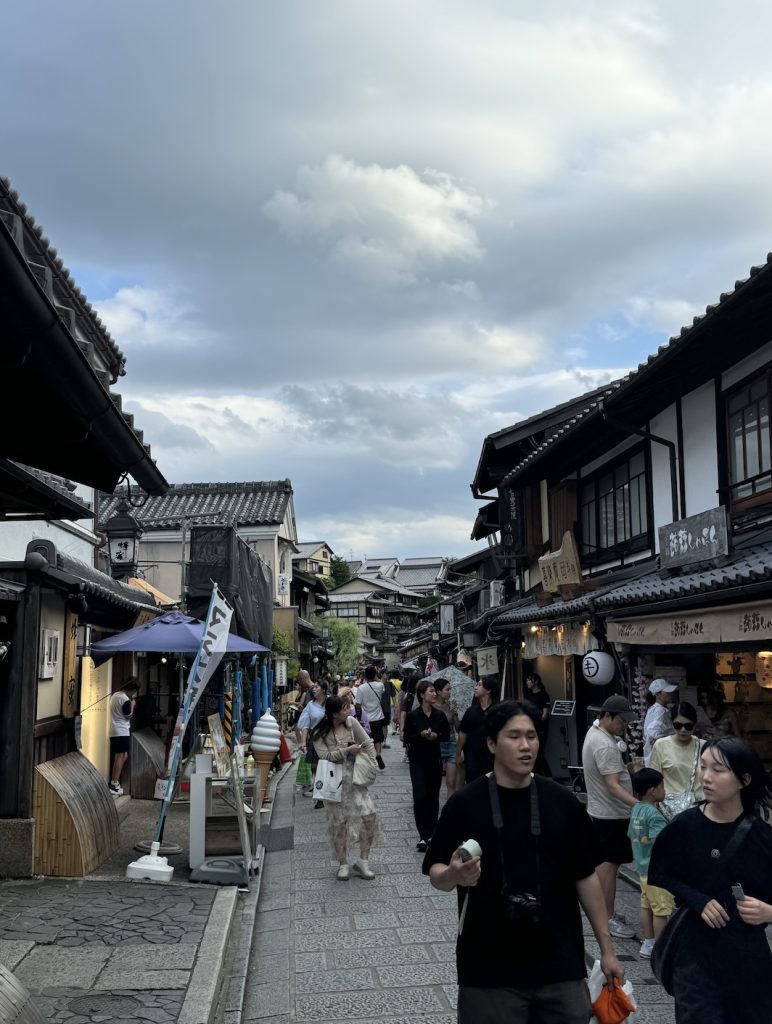
Today, I would like to shine a light on the recent closure of certain areas in the Gion district due to tourists behaviour similar to certain areas being photo banned. Under my impression, it is quite a strong stand that the city of Kyoto has taken with this action especially for a low- context culture like japan which values communitarianism so much. Closing down certain areas for tourists to me shows the lack of trust in foreign nationals, but that being said I cannot imagine that the city has just done this because they felt like it. To the outside it seems like a failure of managing the flows of tourism and I feel like in Japanese culture people tend to struggle with accepting failure so I am hoping to find out how the representative of the Kyoto City Tourism Association responds to my questions.
Conclusion and Reflection:
I have learnt that the rising number of tourists plays a huge role on how the tourism industry in Kyoto can actually struggle with adjusting to the changes. I also feel like I noticed that the rich history and cultural significanse is what makes Kyoto so attractive. That being said I think we just saw a good example of low-context culture and the importance of communitarism in Japan. I felt like it was difficult for the representative to acknowledge that there has been atleast some sort of failure regarding the closure of the Gion district or the lack of change within the industry. Also when it comes to the communitarism I think it is wrong to expect the tourists to change their behaviour solely through the offer of education, I think a good middleground would’ve been to offer guided tours for example, through those closed districts. That being said I also compeletly understand the views of the locals which get annoyed by the masses of tourists and their behaviour, in a sense I think they have made the correct decision. Because tourism couldn’t exist without the local economy & people