
2nd August
With Osaka being on of the most visited destinations in Japan, I thought it is only right to conduct a Interview here as well. This time it will be with a representative of the Namba Tourism Information Center, which is a part of the Osaka Convention & Tourism Bureau.
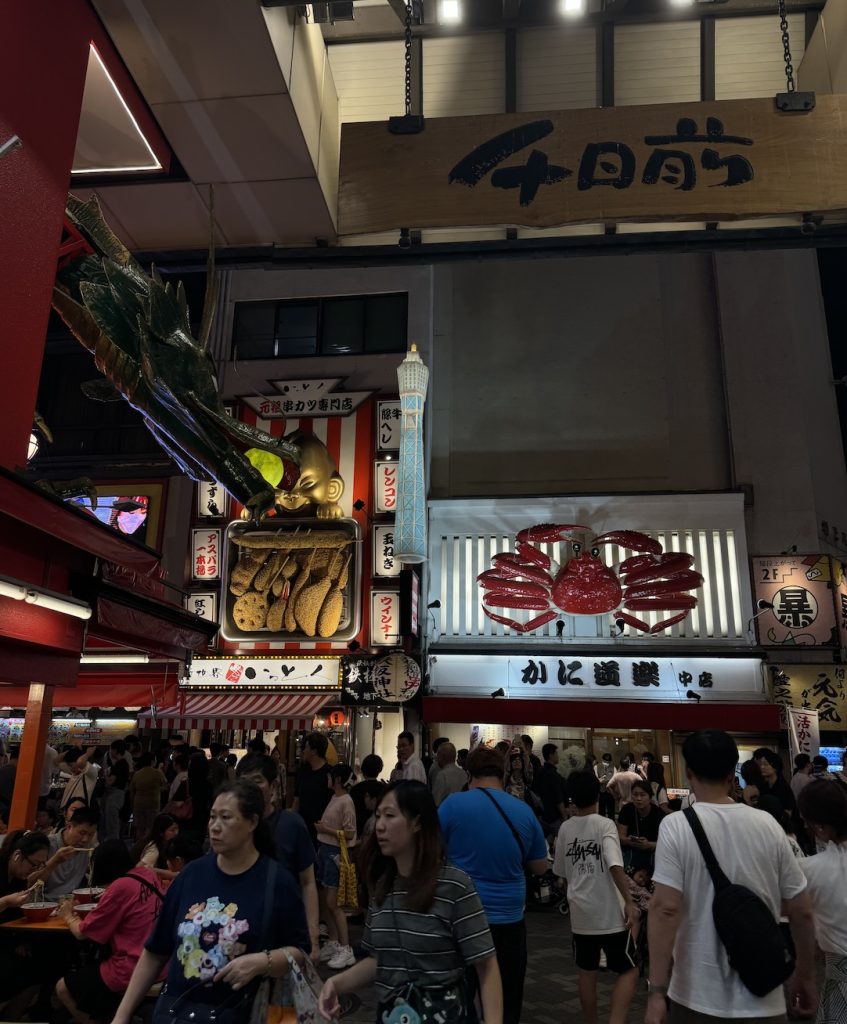
In this Interview I want to find out how Osaka is dealing with the flow of tourists as well as how the culture has changed over the years. As Osaka is one of the most visited cities and more known for its “wildness” amongst japanese destinations. I want to see if this Interview helps me to connect my then newly gained Information to the theory of the Acculturation Model by John Berry[1] which we have discussed in class. Because something special I have already noticed is that shops in Osaka have way more Korean and Chinese speaking staff then I have seen in Tokyo.
So below you can find the full Interview which I have conducted with a representative of the Namba OsakaInfo Center as well as my conclusion and reflection which I have done after the Interview.
Conclusion and reflection:
This interview with helped me understand how Osaka is managing its changing tourism landscape while maintaining its cultural identity. One of the key points was how Osaka’s openness and “wild” nature, rooted in its history as a merchant city, have made it more adaptable to the growing influx of international tourists.
This cultural advantage is visible in the multilingual services and modified offerings for foreign visitors which leads to a deeper cultural integration without losing the essence of what makes Osaka unique.
The representative’s comments tied in well with John Berry’s Acculturation Model, which I have learnt about in class. Especially the concept of integration, where both local and international cultures coexist and influence each other without one dominating are very accurate for Osaka in my opinion . It’s clear that Osaka is using global influences while still holding on to its traditions, creating a kind of “hybrid” experience that benefits both tourists and locals.
Reflecting on the discussion about Osaka’s “wild” spirit, I can now also understand why the city feels more approachable and open compared to other parts of Japan. The Osakan directness, humor, and lively attitude seem to naturally fit to how tourists are welcomed.
To also note some negative points though, I think I have failed to mention the actual masses of tourists that come, I think it could’ve been interseting how the more “wild” Osaka deals with “overtourism”. And if they ever run into problems managing the flow of tourists.
But in general I can say this interview reaffirmed the idea that while tourism can bring change, it doesn’t have to come at the expense of cultural heritage. Osaka is a prime example of how a city can balance growth and preservation, offering a modern yet traditional experience for both locals and visitors alike. This duality is what makes the city so special, and something I’ll be reflecting on as I continue my studies in tourism.
[1] Berry, J.W. (1980) Acculturation as varies of adaptation. In: Padila, A. (Ed.) Acculturation: Theory, models and findings. Boulder. P. 9-25