30th July
The first day in Kyoto I wanted to dedicate to research a bit about it’s history as it is I would say the cultural and historical hotspot of Japan.
Kyoto, is often called the heart of Japan. To me Kyoto is the perfect city when it comes to history and modernity. It even used to be the capital of Japan for over a thousand years, from 794 to 1868. It was known as a cultural and spiritual center. Kyoto is in my opinion the only city in Japan where you can feel that history everywhere you go. There are countless temples, shrines, and traditional wooden houses and the quiet streets seem untouched by time. It has a different feel to it especially when coming from the busy city of tokyo. Describing it is quite difficult but I always feel like I’ve truly arrived in Japan whilst being in Kyotot.
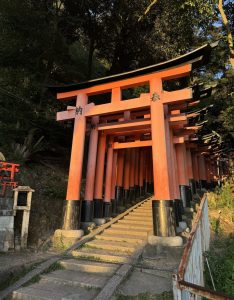
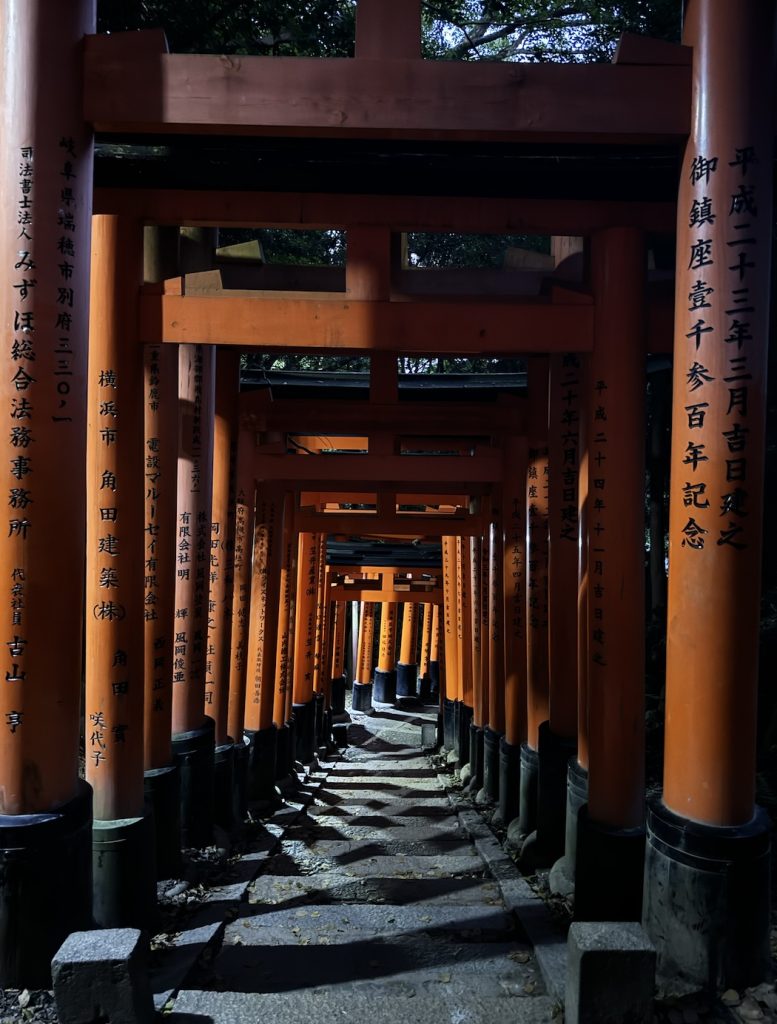
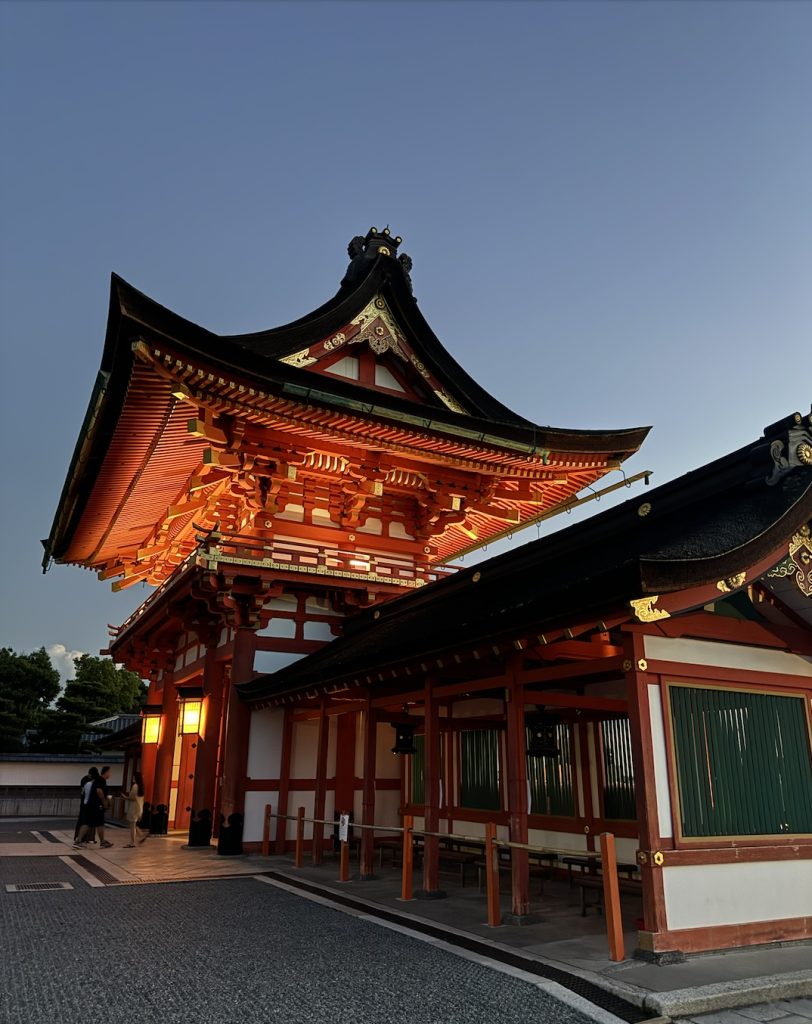
One of the main things Kyoto is known for are the countless “temples and shrines”. Some of the most famous ones are Kinkaku-ji and Fushimi Inari Taisha. But these are only two within over a thousand temples. These places aren’t just tourist attractions; they’re also active places of worship. And many locals still come to pray, make offerings, and celebrate festivals. Traditionally even weddings are usually held at tempels.
Kyoto is also famous for its “traditional arts”. For example tea ceremony, ikebana (flower arranging), and geisha culture. This obviously makes it a cultural hub. The Gion district, in particular, is where you can still see geishas, or “geikos”, walking to their evening appointments. Though the practice has declined it’s still a living tradition. Maikos (apprentice geishas) learn the arts of dance, music, and conversation until they become geishas. The problem is due to their practice many tourists want to see them which can even be to the point of harassment. This sadly is one of the reasons that a part of the Gion District had to be closed due to the tourists behaviour, but I will get into that in tomorrow’s interview.
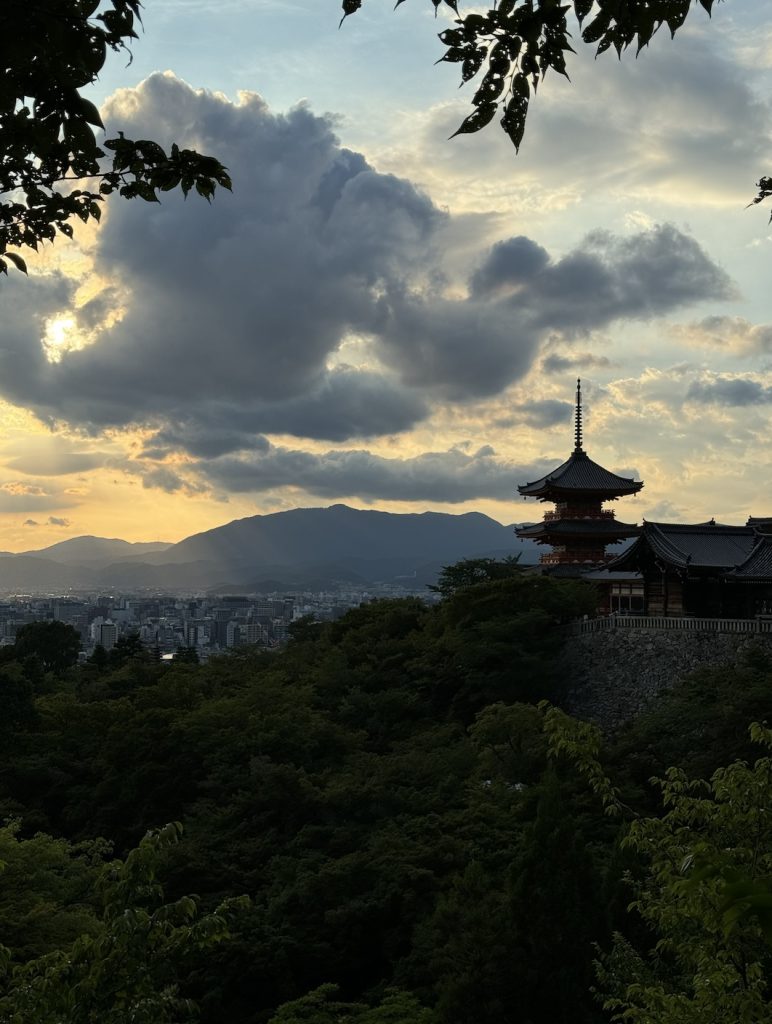
So we can say that the city has this reputation for being quiet and peaceful. Nevertheless it is full of tourists especially in the peak seasons of cherry blossoms and autumn for the colorful leaves. During those times Kyoto feels more crowded than calm. But if you dont go to places which are flooded with visitors such asArashiyama’s bamboo grove or Kiyomizu-dera you can still have a very nice time. Also golden week can be very overwhelming.
Historically, Kyoto’s influence is hard to overstate. As the seat of the emperor, it was where major cultural developments in “art, literature, religion, and architecture” happened. Many of Japan’s key traditions, like “Noh theater” or “Zen Buddhism”, either started here or were deeply shaped by what was happening in Kyoto at the time. Something which is quite funny to note is that my boss in Switzerland actually used to be a monk in Kyoto participating in the practices of Zen Buddhism.
Even though it’s no longer the political capital, Kyoto still holds onto that sense of importance. It’s like a window into Japan’s past, but also a place where tradition and modern life coexist in a way that feels… well, kind of well balanced. You might find a centuries-old temple next to a modern café serving matcha lattes. That mix is what makes Kyoto feel like it’s always moving forward, but never forgetting its roots.
Never forgetting their roots is important as we look back into the 2nd World war where Kyoto was actually one of the only cities spared of the bombings especially because they have such a rich cultural history. Which led to Kyoto being able to maintain all these architectural and cultural buildings, being a treasure to japans heritage. So till this day it remains sort of a cultural guardian.
I hope with this information you have gained a good overview of Kyotos history and cultural significance to Japan.