23/24th July
Landing at Narita Airport in Tokyo marked the beginning of my Culfox stay. The first thing that struck me was the great attention to detail, evident from the airport’s cleanliness to the efficiency with which everything operated. The atmosphere was a mix of calm precision and hospitality—a reflection of the Japanese principle of omotenashi, also called the spirit of selfless hospitality.
Every interaction, from customs officials to airport staff, was marked by politeness and an almost choreographed sense of order.
With me being able to speak Japanese it made it easier for me to navigate through the airport. Although at the Narita airport there where many signs in english.
As I stepped outside the terminal, the contrast between the air conditioned airport and the scorching hot outside world was surpsing.
So I quickly got back in and searched for my train to my accomodation.
It was busy at the station, yet, even in the midst of activity, there was a prevailing sense of calm. The people moved with purpose, but there was no rush
Mobility Concept: First Impression
Coming from Switzerland I am used to seamless transportation services. And I can say that Japan doesn’t fall short in terms of punctuality and service. The biggest advantage I have noticed is bringing my own so called IC card.
The IC card system is a convenient way to travel within the country. The system is based of rechargeable cards. These cards, like Suica or Pasmo, are similar to debit cards which you can top-up. They are used for public transportation but you can also use them to pay at convenience stores, vending machines, and even some restaurants. The twist is the so called “tap and go” function. You simply tap the card on a reader when you enter and leave a station or board a bus. The fare gets deducted automatically. No need to work with cash or paper tickets.
Another part which is special the is that each region of Japan has its own IC card. So, while Suica works in Tokyo, Kansai has Icoca, and Fukuoka uses Nimoca. The fun part is that most of these cards are interchangeable, so you can use Suica in Osaka or Icoca in Tokyo. However, some smaller or more rural areas might not fully support all IC cards, so sometimes the functionality of “tap and go” struggles a bit.
Also, while the card works on nearly all public transport systems, it doesn’t always play nice with every bus route or specific transit line in smaller cities. So, a bit of spontaneity is required especially when travelling outside of the main destinations.
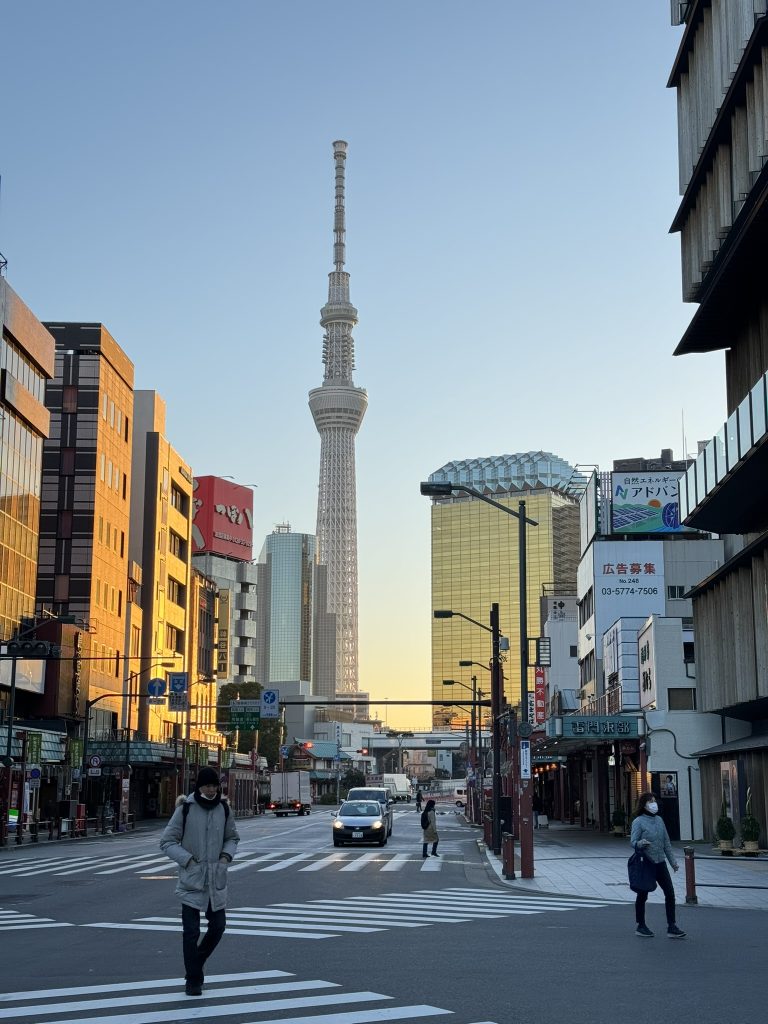
So, after arriving and checking in at the accommodation I went ahead and planned a few things which I wanted to accomplish whilst my time being in Tokyo. One of the things being planning an Interview with the Tourist Information Bureau in Asakusa which was conveniently close to my accommodation. So I was able to get an appointment for the next day, for a short interview.
That concludes the first day of my Culfox stay which I am very excited about.